Agenda
The agenda is still being rolled out and is subject to change. Please check back for the most recent updates.
A Street Lesson for “Nobody”: Documenting 2025 Recall Mobilization and Sustaining the Civic Momentum in the Long Run




In 2025, Taiwan experienced an unprecedented "Mass Recall Movement" driven by citizens. Unlike the traditional political confrontations mobilized by political parties, this movement was initiated by a group of "nobodies" from various walks of life, aiming to harness civic power to rectify the chaos in the Legislative Yuan.
This session invites core members from recall groups in three different electoral districts to break down how they promoted democracy both on the streets and online. We won't discuss party battles; instead, we'll focus on the "open-source communication techniques."
Additionally, we'll explore the concept of "citizens not stepping back" after the ballots are put away, sharing how the post-recall community energy continues to take root locally, ensuring that civic power doesn't fade after the movement concludes. This is a session about "action" and "protection," inviting those who also wish to make a grassroots impact to listen to the journeys of these individuals.
Digital Lifeline: Everything You Need to Know About Subsea Cables




Submarine internet cables are definitely in the spotlight recently. Surrounded by the ocean, Taiwan is highly sensitive to any changes affecting these critical networks, making us especially vulnerable amidst geopolitical uncertainties. We will take a deep dive into the many dimensions of the submarine cable issue so everyone can understand what our real concerns should be. We will also analyze their impact from the perspectives of public policy, social security, and civic engagement.
What to Do When the Drones Arrive? A Civilian’s Guide to Survival and Disaster Mitigation

Drones have rapidly evolved in today's warfare environment. Beyond capturing stunning aerial views of the Tamsui River, the ongoing war in Ukraine has highlighted new airborne threats faced by civilians—not just traditional bombings, but also attacks from loitering munitions in urban and suburban areas. This session invites speakers with frontline experience in Ukraine and expertise in drone operations to discuss strategies for civilian survival and risk mitigation during drone assaults. Topics will include building early warning awareness and personal and family strategies for concealment, shelter, and defense.
Open Work in a Closed Era: Loss and Regeneration of Hong Kong’s Public Data



Hong Kong is experiencing systemic public-data attrition as government datasets, policy archives, and regulatory records are removed or restricted. This creates structural gaps in the city’s information infrastructure. In response, civil-society technologists have begun developing Resilient Digital Public Resources (RDPR)—decentralised, censorship-resistant systems that replicate, preserve, and validate public information independent of state-controlled platforms.
This panel analyses the technical and governance implications of shrinking transparency, focusing on how “national security” and “privacy” rationales have altered data-access architectures. Panelists will present RDPR initiatives such as decentralized judicial and legislative repositories, government-website captures, and event-based data collections.
We discuss operational constraints, participation barriers, and the cost structures of distributed storage. The panel will further explore how RDPR can function as a resilient, community-maintained knowledge substrate capable of withstanding source deletions and information instability. The session invites participants to reconceptualise public-data preservation as an engineering and governance problem—one where communities build and maintain the infrastructure that formal institutions are withdrawing from.
Human Plus AI: How to Build a Dashboard for the Taiwan Strait Situation?
"Global Affairs" is the first media outlet in Taiwan to systematically develop a "Taiwan Strait Situation Dashboard" to assess Chinese military incursions in the gray zone. This was accomplished by combining data from Taiwan's Ministry of National Defense and Japan's Ministry of Defense with additional data collected from the Automatic Identification System for ships.
How did we achieve this, and in what areas can we improve with community input?
From the g0v Government Budget Visualization to the Open Budget Platform: A 14-Year Journey of Open Budgeting

In 2012, g0v emerged with the "g0v Central Government General Budget." By 2025, Open launched the "Open Budget Platform." How much progress has been made over the years in making government budgets more transparent? What can we achieve now, and how can we use budgeting as a foundation for open government financial flows in the future?
Frontline Democracy: How Civil Society Identifies the Hidden Risks of War

We aim to invite experts from various fields to utilize the wargaming framework developed by Frontline Democracy in scenarios where Taiwan faces blockades or warfare initiated by the Chinese government. Our focus is on identifying overlooked points of societal resilience in areas such as communication, healthcare, energy, democratic governance, and information. Instead of waiting to react after a conflict occurs, we want to proactively address these issues through civil society collaboration and propose solutions for government and societal consideration.
Workshop Agenda
- Scenario Introduction: Share the core findings and scenarios from the Frontline Democracy 2025 wargame.
- Risk Assessment: Invite participants to identify unrecognized systemic risks and vulnerabilities in social resilience within their areas of expertise (such as technology, law, community, or communication, depending on the context).
- Solution Collaboration: Engage in brainstorming sessions to develop response strategies and collaborative mechanisms.
Open Data in the AI Era: Exploring Co-Creation in Taiwan through International Public-Private Collaboration Case Studies



As AI becomes a critical foundation for public governance and data reuse, the challenge of open data is no longer limited to data release alone. A key question emerges: how can governments and civil society work together to gradually transform open data into AI-ready resources?
This panel draws on five international case studies to examine how governments collaborate with civil society, civic tech communities, and technical practitioners across different institutional and cultural contexts to build sustainable models of AI-oriented open data. The cases include Spain’s ImpulsaDATA program, which provides “accompanied” support for government AI data initiatives; Germany’s German Commons, focusing on large-scale open training datasets; Open Development Cambodia (ODC), which emphasizes trust-building through public–private collaboration; Germany’s Parla system, which embeds collaboration within public sector workflows; and France’s CroissantLLM, which leverages open government data to support model training.
Building on these experiences, the panel aims to create a dialogue space grounded in Taiwan’s context. Bringing together civil society groups, public servants, civic tech communities, and data practitioners, the discussion will focus on three core questions: how can Taiwan’s public sector release more open data within existing legal frameworks to meet AI-era needs? How should Taiwan envision sovereign AI and its public value? And what concrete actions can civil society and civic tech communities begin experimenting with?
Unlocking Parliament: A Democratic Experiment from Open-Source Tools to Community Incubation
We have continually sought entry points for citizen engagement in Open Parliament initiatives. While the Legislative Yuan releases vast amounts of data, it remains difficult to query and interpret, leaving many citizens unsure of how to follow legislative affairs. We believe an “Open Parliament” must be more than a slogan; it must be a concrete effort that empowers citizens of all backgrounds and varying levels of legislative knowledge to actively engage with parliamentary procedures.
To achieve this, we launched a civic initiative bridging tool development and community incubation. To lower the barrier to information access, we developed LawTrace, transforming scattered public data from the Legislative Yuan into a user-friendly interface that makes bills easy to track, analyze, and compare. Concurrently, we introduced the Open Budget Platform to reorganize government financial flows, turning budget data into an accessible, visual foundation for public discourse.
However, tools alone are insufficient. We simultaneously cultivated the g0v Congressthon. This community space allows individuals with diverse expertise to share insights on legislative procedures, exchange tips for navigating parliamentary data, and brainstorm ideas for civic tech innovations.
By leveraging technology to lower access barriers and empowering the community to utilize these tools for issue advocacy, we are conducting a collaborative experiment. Our goal is to see whether this bottom-up civic movement can carry forward the unfinished objectives of the Open Parliament National Action Plan and truly open the doors for dialogue between citizens and the legislature.
g0v Congressth0n: The Birth of an Open Parliament Community
Developing LawTrace: Making Legislative Yuan Open Data Easy to Search and Use
From the g0v Government Budget Visualization to the Open Budget Platform: A 14-Year Journey of Open Budgeting
g0v Congressth0n: The Birth of an Open Parliament Community

In June 2024, Ronny launched the g0v Congress Hackathon, which started as a monthly gathering to discuss potential uses for legislative data. Over time, it evolved into a community hub focused on "Open Parliament." These gatherings, which range from data play sessions and workshops to themed lectures, invite journalists, NGO workers, and legislative assistants to share how they utilize legislative data. Together, they also delve into budget and bill data, uncovering potentially overlooked insights.
Although the "Open Parliament National Action Plan" has temporarily stalled within the legislature, the focus on parliamentary transparency and data usability remains strong, gaining momentum through the Congress Hackathon. Through this event, we aim to demonstrate how these gatherings have fostered a community where individuals interested in open parliament, data application, and civic engagement can meet, exchange ideas, and collaborate.
Self-Sovereign Identity and Privacy: Against the Forced Disclosure of Disability Status


Explore how public services and systems unintentionally assume the exposure of personal identity information as a given in their design. Starting from everyday real-life experiences, extending to address, residence, age, and various qualifications, this project doesn't focus on personal feelings or experiences. Instead, it uses structural analysis to examine how systems equate "identity verification" with "identity exposure" through forms, processes, and technological design, leading to institutional barriers and power imbalances.
By using a dialogue format, the project invites individuals from different roles to discuss which pieces of identity information are actually unnecessary for achieving the intended goals. It aims to compile actionable insights and system adjustment directions that can serve as a foundation for future civic technology initiatives and policy discussions.
Digital Equity Starts with Accessibility: Changing Perspectives to See a Different Digital World

Creating an inclusive digital environment isn't just for people with disabilities today; it's about paving a path for ourselves in the future that is easy for everyone to use.
Globally, about a quarter of the population consists of individuals with disabilities or elderly people who face numerous challenges when using digital products due to sensory decline, physical limitations, or cognitive differences. As we all age, accessibility becomes a universal necessity, not just a minority requirement.
A11y Camp is a digital accessibility workshop centered around experience and inclusivity. We invite participants to temporarily set aside their reliance on visuals and instead use "listening" to navigate smartphones and digital services. When the screen is no longer visible, and content must be found, understood, and operated through sound, many previously overlooked issues become starkly apparent.
During the event, participants will use their phone's screen reader to experience how visually impaired individuals navigate through sound, gaining insight into how unclear guidance and disorganized information structures can lead to confusion.
Join us to experience a different digital world firsthand!
This workshop includes hands-on practice with iOS/Android screen readers. We recommend bringing headphones for a clearer audio experience and to avoid disturbing other participants.
Taking to the Streets to Fight for the Right to Walk: Pedestrian and Traffic Advocacy
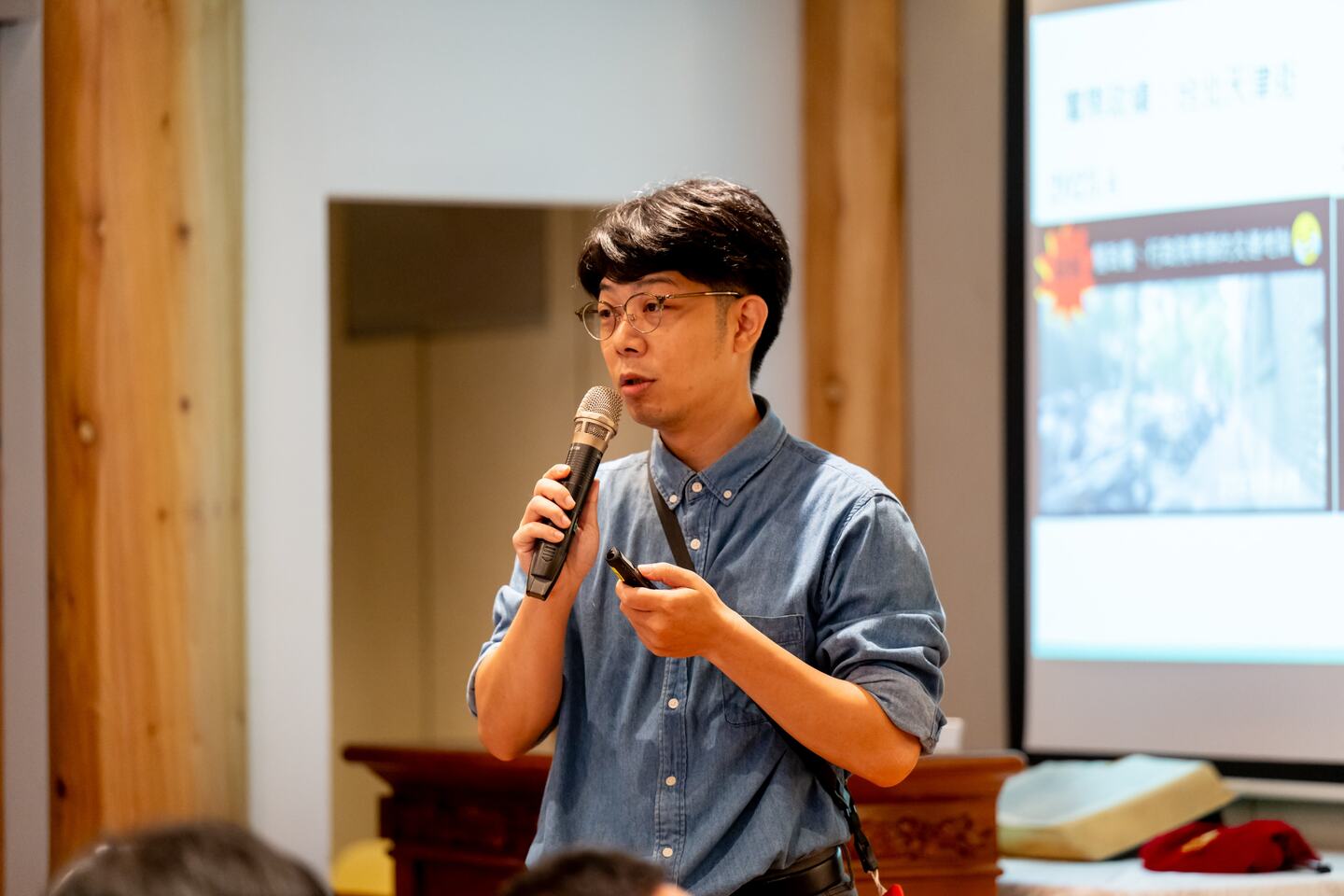

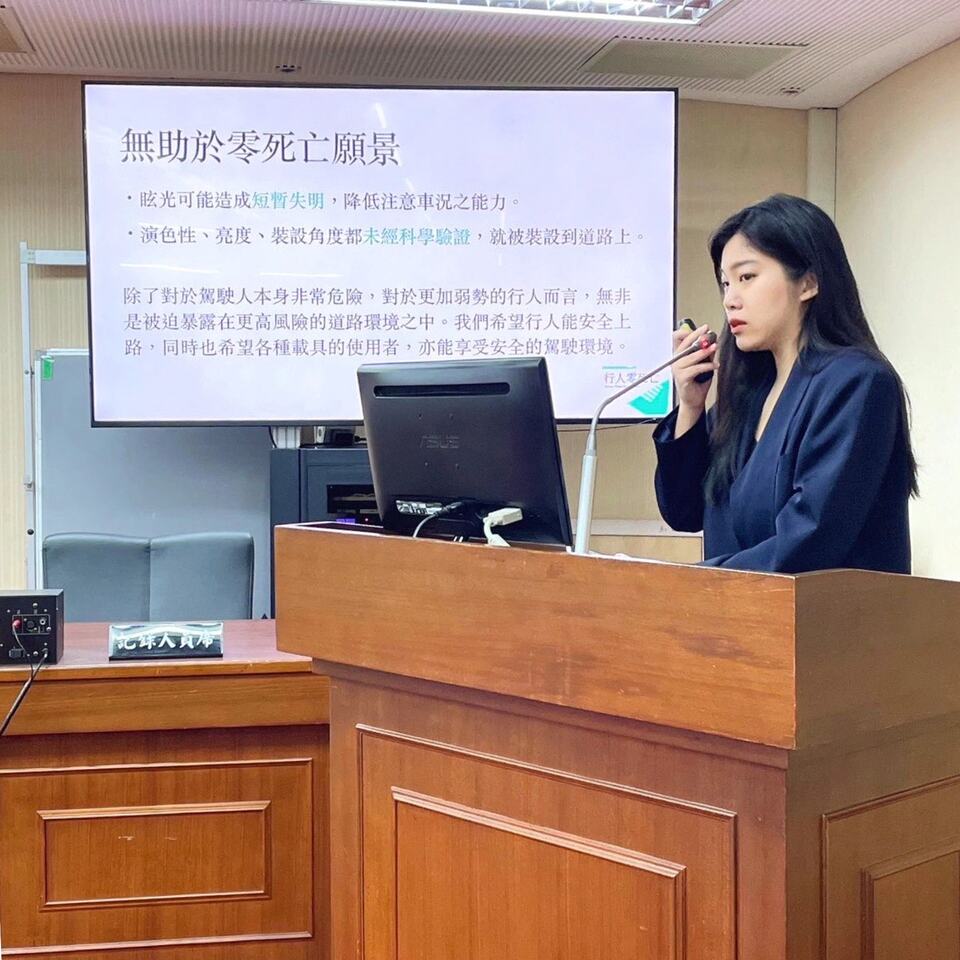
Taiwan's current traffic situation remains a cause for concern. Reports in international media have highlighted the issue, coining the term "pedestrian hell," which has become a focal point of societal debate. In response, a group of traffic reform advocates concerned with pedestrian safety formed a march alliance. They organized a "Return the Streets to the People" march in August 2023. Following the march, the Pedestrian Zero Fatality Promotion Alliance not only advocated for the legislation of the Traffic Safety Basic Law but also actively participated in various traffic meetings, analyzed accident data, held seminars, and collaborated with local councilors and village chiefs to inspect problematic intersections.
The forum is structured to have speakers share their experiences and advocacy efforts in the field of traffic safety, followed by a comprehensive discussion session. Members of the Pedestrian Zero Fatality Promotion Alliance, traffic advocates, and public representatives are expected to be invited to share their insights and discuss strategies for "starting from scratch, from the streets to the legislative chamber" in issue advocacy.
Sharing Tips on Operating Overseas Taiwanese Advocacy Communities: g0v Bay Area, g0v US, and Digital Diplomacy
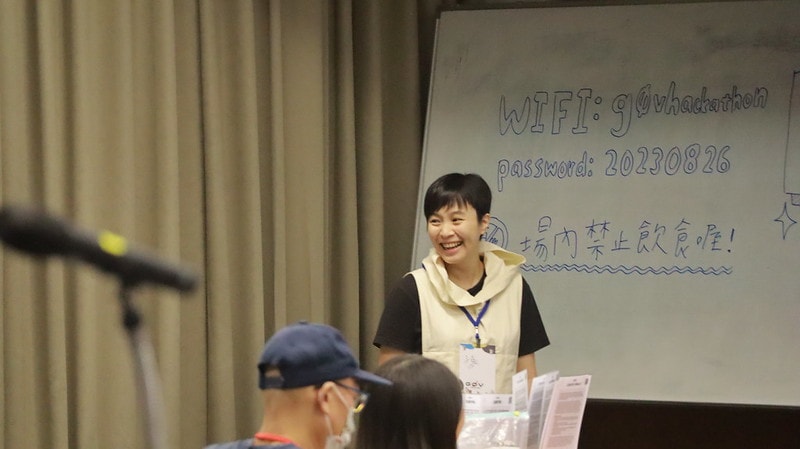

Many people from Taiwan have moved abroad for reasons such as education, work, or the pursuit of dreams, often feeling they have little choice in the matter. Regardless of where they live, some remain deeply connected to their homeland. These individuals have begun gathering more Taiwanese people together to discuss issues, find solutions, and try to alleviate their concerns through action and dialogue.
This agenda focuses on those who have spent years overseas, immersed in the realms of technology and digital spaces while maintaining their Taiwanese identity. The discussion aims to uncover the strategies they use to gather large groups of Taiwanese people for in-person events and to persuade many to dedicate their free time to public service projects instead of resting after work. What challenges do they face? Is it enjoyable? Can this approach be passed on to others? If someone wants to learn this "magic," what sacrifices must be made in return?
Looking at the Budget Together: How Citizens Participate in Budget Oversight



This proposal outlines how civic engagement and data innovation can address the longstanding issues of "lack of transparency, complexity, and difficulty in oversight" in the review of Taiwan's central government budget. The project has developed the "Budget Review Oversight Platform 2.0," which transforms the previously scattered and inaccessible budget proposals—locked away in PDF documents—into structured, searchable, and visualized open data. This enables citizens, media, and civil organizations to systematically understand and analyze legislators' actions on budget cuts, freezes, and amendments.
Additionally, the project introduces a LINE Bot as a gateway for civic participation, inviting the public to assist with data entry and verification. User testing and community feedback are conducted through g0v's legislative hackathons.
This session will share the platform's design logic, experiences in civic collaboration, and how complex budget politics can be transformed into an understandable, discussable, and overseen public infrastructure.
Press+: Turning the News Media Bargaining Code into Digital Public Infrastructure

In response to the trend of large platforms monopolizing media traffic, we aim to shift focus from media bargaining laws to a more technology-driven approach, exploring the establishment of digital public infrastructure. The idea is to implement a revenue-sharing model based on the principle that readers' support goes directly to the media outlets they actually read. This ensures media outlets receive fair compensation. Additionally, by making credibility a machine-readable signal, we can enhance source verification, allowing search engines and AI to more easily identify trustworthy media sources. This also provides readers with clear trust indicators in an environment rife with misinformation and fake content. Finally, a multifunctional curation and referral website will serve as a public gateway. This platform will promote, direct traffic, and present verified content while comparing multiple viewpoints. It will also incorporate tools like thematic grouping and frequency analysis, enabling readers to efficiently understand different reporting perspectives on the same issue and further amplify the reach of credible content in a positive cycle.
Developing LawTrace: Making Legislative Yuan Open Data Easy to Search and Use

LawTrace connects to publicly available data from the Legislative Yuan, enabling users to easily find bills, compare versions, and track legislative progress. Developed by Open Company, LawTrace is committed to making congressional open data truly usable through open data and open source.
This brief talk will share LawTrace's project goals and target users, introduce how we use UI/UX design to make legislative data easier to find and navigate, and explain the practical challenges our engineering team faces in organizing data from the Legislative Yuan, building a structured database, and maintaining data quality over the long term.
After the Blackout: Off-the-grid Communication Solutions in Ukraine, Myanmar and Taiwan


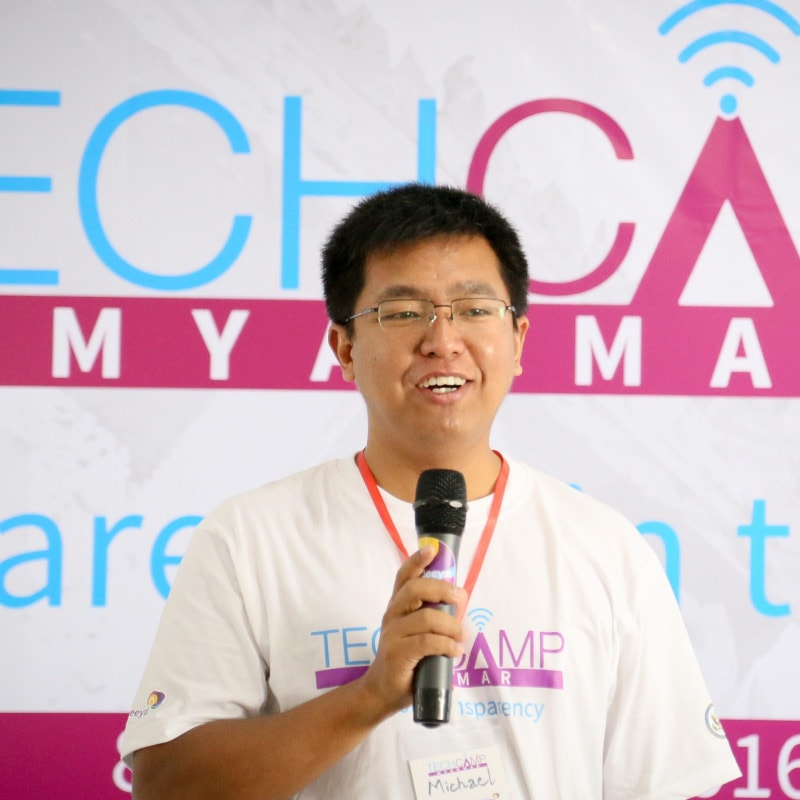

This session explores network resilience through the lens of frontline experiences in Ukraine, Myanmar, and Taiwan. Aidan (dComms) will share insights from Ukraine on building decentralized local networks using open-source tools and local servers. He will discuss maintaining communication during global internet outages and the necessary collaboration between governments and civil society for national digital readiness. Michael (ASORCOM) will highlight the situation in Myanmar, where local communities must build and operate their own communication infrastructure when the state is absent or interfering. As infrastructure risks and gray-zone conflicts rise, what tools can ensure Taiwan's connectivity? Taiwanese speaker Fu-Xiang will introduce Meshtastic as a practical solution. This panel facilitates a vital cross-border exchange on leveraging technology to maintain communication autonomy during extreme crises.
Digital Identity Wallet Forum



Are you aware that Taiwan is implementing a digital wallet initiative? What exactly is being offered with this digital wallet? Is decentralized identity a possibility? What challenges might arise during its implementation? Can it meet international standards and be universally interoperable? This forum invites public and private partners involved in the development of the digital wallet—developer Chunghwa Telecom, consultant KPMG, and governing agency Ministry of Digital Affairs—for a dialogue with volunteers from the g0v Summit Wallet Team to discuss its challenges and future prospects.
Build Your Own Digital Identity Wallet
This workshop, led by community partners, will guide interested participants through brainstorming use cases, planning issuance and verification processes, and experimenting with running a digital wallet service locally. The goal is to practically test whether public sector code works and to explore potential changes in our digital ecosystem.
Sustaining Facing the Ocean: A Roundtable on the Future of Transnational Civic Tech Hackathons in East Asia
Facing the Ocean (FtO) is a transnational civic tech hackathon series that has connected civic tech communities across East Asia since 2019, including g0v, Code for Japan, Code for Korea, and related grassroots networks. Unlike conventional hackathons, FtO emphasizes non-competitive, inclusive collaboration, shared values, and long-term community relationships rather than short-term outputs or prizes.
In 2026, Facing the Ocean is planned to take place in South Korea. This roundtable session invites participants of g0v Summit—especially those deeply involved in civic tech communities—to reflect together on what it takes to sustain initiatives like FtO over time.
The session will begin with a brief introduction to Facing the Ocean, including its history, values, and regional collaborations. We will then open the floor to discussion: How can transnational civic tech hackathons remain relevant and inclusive? What kinds of governance, community care, and resource-sharing are necessary for continuity? And what role can communities like g0v play in shaping the future of Facing the Ocean?
This roundtable aims to both introduce FtO to new audiences and learn from the collective wisdom of the g0v community.
Digital Resilience Lab: Off-the-grid Network Technology


This roundtable focuses solely on practical implementation. We will bring together individuals experienced in deploying decentralized communication systems in war zones and jungles, along with Taiwanese developers specializing in service and cloud infrastructure, to engage in a technical breakdown. The dComms team will share insights into their technical decisions made in Ukraine, including the choice of federated protocols, the distributed deployment of local servers, and the real-world challenges and limitations of P2P content delivery when infrastructure is under attack. Michael Suantak will present a different engineering challenge faced in extreme conditions: how to ensure mesh networks and local servers are maintained and operated by the community in rural areas lacking stable electricity and professional maintenance personnel. Through this practical exchange of technology, Taiwanese developers are invited to apply these insights to local contexts and discuss how to build alternative networks and systematize the process.
Community Resilience & Tool Iteration: Village Chiefs as a Response Node
This agenda explores the concept of using community leaders as testable nodes for community response, particularly in scenarios where threats from war, gray zone conflicts, and natural disasters coexist. It seeks to understand how community mutual aid can be structured to prevent the burnout of goodwill, transforming into an iterative and resilient system. Community leaders are institutionally expected to reflect public sentiment, report disasters, promote awareness, and coordinate efforts. However, differences in resources, capabilities, and political relationships across communities can lead to these nodes malfunctioning or becoming overloaded.
The agenda proposes a set of "observable indicators" (such as transparency of information channels, disaster collaboration integration, and resource traceability during communication outages) to assess community vulnerabilities in the face of misinformation and communication breakdowns. When community leaders are unable to function effectively, alternative solutions (like autonomous disaster prevention networks and information verification processes) will be considered. The agenda will also delve into the boundaries between "public outsourcing" and "civic responsibility," clarifying the division of duties between government obligations and community collaboration. The goal is to transform one-time mobilization efforts into replicable, learnable, and accountable long-term mechanisms.
As geopolitical tensions intensify and infrastructure grows more fragile, the internet can no longer be taken for granted. If disconnection becomes a real risk, how do we keep society running? Initiated by the Cyborg Resilience Co-Lab (CRC) and OpenFun Ltd., this track explores digital resilience from both technical and security perspectives. It examines submarine cables as critical infrastructure, while bringing in practitioners from Ukraine and Myanmar to share how decentralized communication networks can be built and sustained under extreme conditions using open-source tools and local servers.
Beyond the panels, a technical roundtable focuses on the real-world challenges of off-grid networks—how to deploy and maintain them with limited power and resources. Participants can also join the interactive “Off-Grid Ops” challenge to experiment with tools like Meshtastic in hands-on scenarios.Bringing together global experience and local experimentation, this track invites participants to rethink connectivity—and how we might stay connected when the network itself fails.
When Submarine Cables Go Dark: Measuring the Resilience of Websites Used in Taiwan
Digital Lifeline: Everything You Need to Know About Subsea Cables
After the Blackout: Off-the-grid Communication Solutions in Ukraine, Myanmar and Taiwan
Digital Resilience Lab: Off-the-grid Network Technology
When Submarine Cables Go Dark: Measuring the Resilience of Websites Used in Taiwan

At the end of last December, an undersea earthquake damaged more than half of Taiwan’s communication cables. Combined with ongoing cable incidents in the region, people have already experienced noticeable network slowdowns over the past few months.
What if things get even worse?
If Taiwan were to lose all international connectivity, which websites that we rely on every day would still function—and which ones would fail completely? How would undersea cable disruptions affect everyday Internet in Taiwan?
Since the first “g0v Digital Resilience Hackathon” from late 2023, Irvin has been exploring this central question. This work evolved into a full research project supported by the APNIC Foundation starting in October 2025, in collaboration with the Open Culture Foundation (OCF).
We collected and analyzed approximately 2,000 of the most popular websites used by people in Taiwan, performing request-level measurements on their homepage loading behavior. The results show that at least 47% of websites would fail to function properly, plus another 42% exhibit high-risk dependencies, under a complete international disconnection scenario.
Check https://resilience.ocf.tw/web for code, data, and results.
What do these findings mean for digital resilience—and what can be done about it? Join us to explore the hidden dependencies behind modern web services and discuss how Taiwan can better prepare for a “cables down” scenario.
From the deserts of Rojava and the plains of Ukraine to the mountains of Taiwan—drawing from their firsthand experience in modern warfare, our keynote speaker invites Taiwan’s active civil society to reflect on the vital lessons our island, situated on the periphery of empire and authoritarianism, can draw from today’s global conflicts.

Unconference: An Unconference Experiment to Dismantle Disciplinary Frameworks
We are a team of students from National Taiwan University known as the X-Salou Interdisciplinary Salon. This workshop distills the essence of our interdisciplinary salons, returning full control of the agenda to the participants. Through an issue marketplace, we will live-source subtopics for group discussions and engage in direct logical exchanges. If you are tired of one-way lectures and goal-oriented workshops, come experience this collision of ideas and become our future co-creation partner.
Unconference: Workshop: What Does a More Rational/Ideal Social Media Platform Look Like?
Social media has become a central arena for information and dialogue, yet existing platform mechanisms often exacerbate social divisions and undermine the quality of public discourse. While dissatisfaction with the status quo is widespread, do we truly have a consensus on what a rational and feasible social media platform looks like? This session begins with an experiment—a social media platform designed specifically for rational conversation—to explore the institutional trade-offs and challenges in promoting deep, reasoned discussion. Participants will engage in a workshop to discuss value judgments regarding design and argument structures, aiming to develop a diverse and clear consensus on the characteristics of an ideal social media platform.
Unconference: How Should Political Party Domain Names Be Used?
We've secured the political party domain names, so what's next? How should they be used? (Discussion) Should they be considered public resources? (Abuse) Let's explore how to use the three currently available political party domain names. (If time permits, we can also discuss how TWNIC should handle parodies and domain name policies.)
Unconference: Quick-Build Chair - Making the Summit’s Visual Identity On-Site
Want to take home a free Summit souvenir? Want to experience the fun of handmade crafts? Come to the Quick-Build Chair workshop to make a handmade chair and take it home! This workshop will teach everyone how to make chairs using recycled packing straps. Follow along with this workshop so you can bring a unique souvenir home!
Got a wild idea you’ve been itching to share over the last two days? This is your absolute final chance to hit the big screen at R0 and shout out to the community at g0v Summit 2026!
- Time: 05/24 (Day 2) 16:40 - 17:10
- Location: R0 International Conference Hall
- Time Limit: 4 minutes per person (Strictly enforced––you will be forced offstage when time is up!)
- How to Sign Up: Registration opens at 12:10 PM on the day of the Lightning Talk on the whiteboard next to the 3rd-floor Check-in desk.
From the deserts of Rojava and the plains of Ukraine to the mountains of Taiwan—drawing from their firsthand experience in modern warfare, our keynote speaker invites Taiwan’s active civil society to reflect on the vital lessons our island, situated on the periphery of empire and authoritarianism, can draw from today’s global conflicts.
What to Do When the Drones Arrive? A Civilian’s Guide to Survival and Disaster Mitigation
Drones have rapidly evolved in today's warfare environment. Beyond capturing stunning aerial views of the Tamsui River, the ongoing war in Ukraine has highlighted new airborne threats faced by civilians—not just traditional bombings, but also attacks from loitering munitions in urban and suburban areas. This session invites speakers with frontline experience in Ukraine and expertise in drone operations to discuss strategies for civilian survival and risk mitigation during drone assaults. Topics will include building early warning awareness and personal and family strategies for concealment, shelter, and defense.
Open Data in the AI Era: Exploring Co-Creation in Taiwan through International Public-Private Collaboration Case Studies
As AI becomes a critical foundation for public governance and data reuse, the challenge of open data is no longer limited to data release alone. A key question emerges: how can governments and civil society work together to gradually transform open data into AI-ready resources?
This panel draws on five international case studies to examine how governments collaborate with civil society, civic tech communities, and technical practitioners across different institutional and cultural contexts to build sustainable models of AI-oriented open data. The cases include Spain’s ImpulsaDATA program, which provides “accompanied” support for government AI data initiatives; Germany’s German Commons, focusing on large-scale open training datasets; Open Development Cambodia (ODC), which emphasizes trust-building through public–private collaboration; Germany’s Parla system, which embeds collaboration within public sector workflows; and France’s CroissantLLM, which leverages open government data to support model training.
Building on these experiences, the panel aims to create a dialogue space grounded in Taiwan’s context. Bringing together civil society groups, public servants, civic tech communities, and data practitioners, the discussion will focus on three core questions: how can Taiwan’s public sector release more open data within existing legal frameworks to meet AI-era needs? How should Taiwan envision sovereign AI and its public value? And what concrete actions can civil society and civic tech communities begin experimenting with?
Digital Equity Starts with Accessibility: Changing Perspectives to See a Different Digital World
Creating an inclusive digital environment isn't just for people with disabilities today; it's about paving a path for ourselves in the future that is easy for everyone to use.
Globally, about a quarter of the population consists of individuals with disabilities or elderly people who face numerous challenges when using digital products due to sensory decline, physical limitations, or cognitive differences. As we all age, accessibility becomes a universal necessity, not just a minority requirement.
A11y Camp is a digital accessibility workshop centered around experience and inclusivity. We invite participants to temporarily set aside their reliance on visuals and instead use "listening" to navigate smartphones and digital services. When the screen is no longer visible, and content must be found, understood, and operated through sound, many previously overlooked issues become starkly apparent.
During the event, participants will use their phone's screen reader to experience how visually impaired individuals navigate through sound, gaining insight into how unclear guidance and disorganized information structures can lead to confusion.
Join us to experience a different digital world firsthand!
This workshop includes hands-on practice with iOS/Android screen readers. We recommend bringing headphones for a clearer audio experience and to avoid disturbing other participants.
Press+: Turning the News Media Bargaining Code into Digital Public Infrastructure
In response to the trend of large platforms monopolizing media traffic, we aim to shift focus from media bargaining laws to a more technology-driven approach, exploring the establishment of digital public infrastructure. The idea is to implement a revenue-sharing model based on the principle that readers' support goes directly to the media outlets they actually read. This ensures media outlets receive fair compensation. Additionally, by making credibility a machine-readable signal, we can enhance source verification, allowing search engines and AI to more easily identify trustworthy media sources. This also provides readers with clear trust indicators in an environment rife with misinformation and fake content. Finally, a multifunctional curation and referral website will serve as a public gateway. This platform will promote, direct traffic, and present verified content while comparing multiple viewpoints. It will also incorporate tools like thematic grouping and frequency analysis, enabling readers to efficiently understand different reporting perspectives on the same issue and further amplify the reach of credible content in a positive cycle.
As geopolitical tensions intensify and infrastructure grows more fragile, the internet can no longer be taken for granted. If disconnection becomes a real risk, how do we keep society running? Initiated by the Cyborg Resilience Co-Lab (CRC) and OpenFun Ltd., this track explores digital resilience from both technical and security perspectives. It examines submarine cables as critical infrastructure, while bringing in practitioners from Ukraine and Myanmar to share how decentralized communication networks can be built and sustained under extreme conditions using open-source tools and local servers.
Beyond the panels, a technical roundtable focuses on the real-world challenges of off-grid networks—how to deploy and maintain them with limited power and resources. Participants can also join the interactive “Off-Grid Ops” challenge to experiment with tools like Meshtastic in hands-on scenarios.Bringing together global experience and local experimentation, this track invites participants to rethink connectivity—and how we might stay connected when the network itself fails.
When Submarine Cables Go Dark: Measuring the Resilience of Websites Used in Taiwan
Digital Lifeline: Everything You Need to Know About Subsea Cables
After the Blackout: Off-the-grid Communication Solutions in Ukraine, Myanmar and Taiwan
Digital Resilience Lab: Off-the-grid Network Technology
When Submarine Cables Go Dark: Measuring the Resilience of Websites Used in Taiwan
At the end of last December, an undersea earthquake damaged more than half of Taiwan’s communication cables. Combined with ongoing cable incidents in the region, people have already experienced noticeable network slowdowns over the past few months.
What if things get even worse?
If Taiwan were to lose all international connectivity, which websites that we rely on every day would still function—and which ones would fail completely? How would undersea cable disruptions affect everyday Internet in Taiwan?
Since the first “g0v Digital Resilience Hackathon” from late 2023, Irvin has been exploring this central question. This work evolved into a full research project supported by the APNIC Foundation starting in October 2025, in collaboration with the Open Culture Foundation (OCF).
We collected and analyzed approximately 2,000 of the most popular websites used by people in Taiwan, performing request-level measurements on their homepage loading behavior. The results show that at least 47% of websites would fail to function properly, plus another 42% exhibit high-risk dependencies, under a complete international disconnection scenario.
Check https://resilience.ocf.tw/web for code, data, and results.
What do these findings mean for digital resilience—and what can be done about it? Join us to explore the hidden dependencies behind modern web services and discuss how Taiwan can better prepare for a “cables down” scenario.
Digital Lifeline: Everything You Need to Know About Subsea Cables
Submarine internet cables are definitely in the spotlight recently. Surrounded by the ocean, Taiwan is highly sensitive to any changes affecting these critical networks, making us especially vulnerable amidst geopolitical uncertainties. We will take a deep dive into the many dimensions of the submarine cable issue so everyone can understand what our real concerns should be. We will also analyze their impact from the perspectives of public policy, social security, and civic engagement.
Open Work in a Closed Era: Loss and Regeneration of Hong Kong’s Public Data
Hong Kong is experiencing systemic public-data attrition as government datasets, policy archives, and regulatory records are removed or restricted. This creates structural gaps in the city’s information infrastructure. In response, civil-society technologists have begun developing Resilient Digital Public Resources (RDPR)—decentralised, censorship-resistant systems that replicate, preserve, and validate public information independent of state-controlled platforms.
This panel analyses the technical and governance implications of shrinking transparency, focusing on how “national security” and “privacy” rationales have altered data-access architectures. Panelists will present RDPR initiatives such as decentralized judicial and legislative repositories, government-website captures, and event-based data collections.
We discuss operational constraints, participation barriers, and the cost structures of distributed storage. The panel will further explore how RDPR can function as a resilient, community-maintained knowledge substrate capable of withstanding source deletions and information instability. The session invites participants to reconceptualise public-data preservation as an engineering and governance problem—one where communities build and maintain the infrastructure that formal institutions are withdrawing from.
Self-Sovereign Identity and Privacy: Against the Forced Disclosure of Disability Status
Explore how public services and systems unintentionally assume the exposure of personal identity information as a given in their design. Starting from everyday real-life experiences, extending to address, residence, age, and various qualifications, this project doesn't focus on personal feelings or experiences. Instead, it uses structural analysis to examine how systems equate "identity verification" with "identity exposure" through forms, processes, and technological design, leading to institutional barriers and power imbalances.
By using a dialogue format, the project invites individuals from different roles to discuss which pieces of identity information are actually unnecessary for achieving the intended goals. It aims to compile actionable insights and system adjustment directions that can serve as a foundation for future civic technology initiatives and policy discussions.
Sharing Tips on Operating Overseas Taiwanese Advocacy Communities: g0v Bay Area, g0v US, and Digital Diplomacy
Many people from Taiwan have moved abroad for reasons such as education, work, or the pursuit of dreams, often feeling they have little choice in the matter. Regardless of where they live, some remain deeply connected to their homeland. These individuals have begun gathering more Taiwanese people together to discuss issues, find solutions, and try to alleviate their concerns through action and dialogue.
This agenda focuses on those who have spent years overseas, immersed in the realms of technology and digital spaces while maintaining their Taiwanese identity. The discussion aims to uncover the strategies they use to gather large groups of Taiwanese people for in-person events and to persuade many to dedicate their free time to public service projects instead of resting after work. What challenges do they face? Is it enjoyable? Can this approach be passed on to others? If someone wants to learn this "magic," what sacrifices must be made in return?
Sustaining Facing the Ocean: A Roundtable on the Future of Transnational Civic Tech Hackathons in East Asia
Facing the Ocean (FtO) is a transnational civic tech hackathon series that has connected civic tech communities across East Asia since 2019, including g0v, Code for Japan, Code for Korea, and related grassroots networks. Unlike conventional hackathons, FtO emphasizes non-competitive, inclusive collaboration, shared values, and long-term community relationships rather than short-term outputs or prizes.
In 2026, Facing the Ocean is planned to take place in South Korea. This roundtable session invites participants of g0v Summit—especially those deeply involved in civic tech communities—to reflect together on what it takes to sustain initiatives like FtO over time.
The session will begin with a brief introduction to Facing the Ocean, including its history, values, and regional collaborations. We will then open the floor to discussion: How can transnational civic tech hackathons remain relevant and inclusive? What kinds of governance, community care, and resource-sharing are necessary for continuity? And what role can communities like g0v play in shaping the future of Facing the Ocean?
This roundtable aims to both introduce FtO to new audiences and learn from the collective wisdom of the g0v community.
A Street Lesson for “Nobody”: Documenting 2025 Recall Mobilization and Sustaining the Civic Momentum in the Long Run
In 2025, Taiwan experienced an unprecedented "Mass Recall Movement" driven by citizens. Unlike the traditional political confrontations mobilized by political parties, this movement was initiated by a group of "nobodies" from various walks of life, aiming to harness civic power to rectify the chaos in the Legislative Yuan.
This session invites core members from recall groups in three different electoral districts to break down how they promoted democracy both on the streets and online. We won't discuss party battles; instead, we'll focus on the "open-source communication techniques."
Additionally, we'll explore the concept of "citizens not stepping back" after the ballots are put away, sharing how the post-recall community energy continues to take root locally, ensuring that civic power doesn't fade after the movement concludes. This is a session about "action" and "protection," inviting those who also wish to make a grassroots impact to listen to the journeys of these individuals.
Looking at the Budget Together: How Citizens Participate in Budget Oversight
This proposal outlines how civic engagement and data innovation can address the longstanding issues of "lack of transparency, complexity, and difficulty in oversight" in the review of Taiwan's central government budget. The project has developed the "Budget Review Oversight Platform 2.0," which transforms the previously scattered and inaccessible budget proposals—locked away in PDF documents—into structured, searchable, and visualized open data. This enables citizens, media, and civil organizations to systematically understand and analyze legislators' actions on budget cuts, freezes, and amendments.
Additionally, the project introduces a LINE Bot as a gateway for civic participation, inviting the public to assist with data entry and verification. User testing and community feedback are conducted through g0v's legislative hackathons.
This session will share the platform's design logic, experiences in civic collaboration, and how complex budget politics can be transformed into an understandable, discussable, and overseen public infrastructure.
After the Blackout: Off-the-grid Communication Solutions in Ukraine, Myanmar and Taiwan
This session explores network resilience through the lens of frontline experiences in Ukraine, Myanmar, and Taiwan. Aidan (dComms) will share insights from Ukraine on building decentralized local networks using open-source tools and local servers. He will discuss maintaining communication during global internet outages and the necessary collaboration between governments and civil society for national digital readiness. Michael (ASORCOM) will highlight the situation in Myanmar, where local communities must build and operate their own communication infrastructure when the state is absent or interfering. As infrastructure risks and gray-zone conflicts rise, what tools can ensure Taiwan's connectivity? Taiwanese speaker Fu-Xiang will introduce Meshtastic as a practical solution. This panel facilitates a vital cross-border exchange on leveraging technology to maintain communication autonomy during extreme crises.
Unconference: An Unconference Experiment to Dismantle Disciplinary Frameworks
We are a team of students from National Taiwan University known as the X-Salou Interdisciplinary Salon. This workshop distills the essence of our interdisciplinary salons, returning full control of the agenda to the participants. Through an issue marketplace, we will live-source subtopics for group discussions and engage in direct logical exchanges. If you are tired of one-way lectures and goal-oriented workshops, come experience this collision of ideas and become our future co-creation partner.
Unconference: Workshop: What Does a More Rational/Ideal Social Media Platform Look Like?
Social media has become a central arena for information and dialogue, yet existing platform mechanisms often exacerbate social divisions and undermine the quality of public discourse. While dissatisfaction with the status quo is widespread, do we truly have a consensus on what a rational and feasible social media platform looks like? This session begins with an experiment—a social media platform designed specifically for rational conversation—to explore the institutional trade-offs and challenges in promoting deep, reasoned discussion. Participants will engage in a workshop to discuss value judgments regarding design and argument structures, aiming to develop a diverse and clear consensus on the characteristics of an ideal social media platform.
Digital Identity Wallet Forum
Are you aware that Taiwan is implementing a digital wallet initiative? What exactly is being offered with this digital wallet? Is decentralized identity a possibility? What challenges might arise during its implementation? Can it meet international standards and be universally interoperable? This forum invites public and private partners involved in the development of the digital wallet—developer Chunghwa Telecom, consultant KPMG, and governing agency Ministry of Digital Affairs—for a dialogue with volunteers from the g0v Summit Wallet Team to discuss its challenges and future prospects.
Unconference: How Should Political Party Domain Names Be Used?
We've secured the political party domain names, so what's next? How should they be used? (Discussion) Should they be considered public resources? (Abuse) Let's explore how to use the three currently available political party domain names. (If time permits, we can also discuss how TWNIC should handle parodies and domain name policies.)
Unconference: Quick-Build Chair - Making the Summit’s Visual Identity On-Site
Want to take home a free Summit souvenir? Want to experience the fun of handmade crafts? Come to the Quick-Build Chair workshop to make a handmade chair and take it home! This workshop will teach everyone how to make chairs using recycled packing straps. Follow along with this workshop so you can bring a unique souvenir home!
Human Plus AI: How to Build a Dashboard for the Taiwan Strait Situation?
"Global Affairs" is the first media outlet in Taiwan to systematically develop a "Taiwan Strait Situation Dashboard" to assess Chinese military incursions in the gray zone. This was accomplished by combining data from Taiwan's Ministry of National Defense and Japan's Ministry of Defense with additional data collected from the Automatic Identification System for ships.
How did we achieve this, and in what areas can we improve with community input?
Community Resilience & Tool Iteration: Village Chiefs as a Response Node
This agenda explores the concept of using community leaders as testable nodes for community response, particularly in scenarios where threats from war, gray zone conflicts, and natural disasters coexist. It seeks to understand how community mutual aid can be structured to prevent the burnout of goodwill, transforming into an iterative and resilient system. Community leaders are institutionally expected to reflect public sentiment, report disasters, promote awareness, and coordinate efforts. However, differences in resources, capabilities, and political relationships across communities can lead to these nodes malfunctioning or becoming overloaded.
The agenda proposes a set of "observable indicators" (such as transparency of information channels, disaster collaboration integration, and resource traceability during communication outages) to assess community vulnerabilities in the face of misinformation and communication breakdowns. When community leaders are unable to function effectively, alternative solutions (like autonomous disaster prevention networks and information verification processes) will be considered. The agenda will also delve into the boundaries between "public outsourcing" and "civic responsibility," clarifying the division of duties between government obligations and community collaboration. The goal is to transform one-time mobilization efforts into replicable, learnable, and accountable long-term mechanisms.
Frontline Democracy: How Civil Society Identifies the Hidden Risks of War
We aim to invite experts from various fields to utilize the wargaming framework developed by Frontline Democracy in scenarios where Taiwan faces blockades or warfare initiated by the Chinese government. Our focus is on identifying overlooked points of societal resilience in areas such as communication, healthcare, energy, democratic governance, and information. Instead of waiting to react after a conflict occurs, we want to proactively address these issues through civil society collaboration and propose solutions for government and societal consideration.
Workshop Agenda
- Scenario Introduction: Share the core findings and scenarios from the Frontline Democracy 2025 wargame.
- Risk Assessment: Invite participants to identify unrecognized systemic risks and vulnerabilities in social resilience within their areas of expertise (such as technology, law, community, or communication, depending on the context).
- Solution Collaboration: Engage in brainstorming sessions to develop response strategies and collaborative mechanisms.
Unlocking Parliament: A Democratic Experiment from Open-Source Tools to Community Incubation
We have continually sought entry points for citizen engagement in Open Parliament initiatives. While the Legislative Yuan releases vast amounts of data, it remains difficult to query and interpret, leaving many citizens unsure of how to follow legislative affairs. We believe an “Open Parliament” must be more than a slogan; it must be a concrete effort that empowers citizens of all backgrounds and varying levels of legislative knowledge to actively engage with parliamentary procedures.
To achieve this, we launched a civic initiative bridging tool development and community incubation. To lower the barrier to information access, we developed LawTrace, transforming scattered public data from the Legislative Yuan into a user-friendly interface that makes bills easy to track, analyze, and compare. Concurrently, we introduced the Open Budget Platform to reorganize government financial flows, turning budget data into an accessible, visual foundation for public discourse.
However, tools alone are insufficient. We simultaneously cultivated the g0v Congressthon. This community space allows individuals with diverse expertise to share insights on legislative procedures, exchange tips for navigating parliamentary data, and brainstorm ideas for civic tech innovations.
By leveraging technology to lower access barriers and empowering the community to utilize these tools for issue advocacy, we are conducting a collaborative experiment. Our goal is to see whether this bottom-up civic movement can carry forward the unfinished objectives of the Open Parliament National Action Plan and truly open the doors for dialogue between citizens and the legislature.
g0v Congressth0n: The Birth of an Open Parliament Community
Developing LawTrace: Making Legislative Yuan Open Data Easy to Search and Use
From the g0v Government Budget Visualization to the Open Budget Platform: A 14-Year Journey of Open Budgeting
g0v Congressth0n: The Birth of an Open Parliament Community
In June 2024, Ronny launched the g0v Congress Hackathon, which started as a monthly gathering to discuss potential uses for legislative data. Over time, it evolved into a community hub focused on "Open Parliament." These gatherings, which range from data play sessions and workshops to themed lectures, invite journalists, NGO workers, and legislative assistants to share how they utilize legislative data. Together, they also delve into budget and bill data, uncovering potentially overlooked insights.
Although the "Open Parliament National Action Plan" has temporarily stalled within the legislature, the focus on parliamentary transparency and data usability remains strong, gaining momentum through the Congress Hackathon. Through this event, we aim to demonstrate how these gatherings have fostered a community where individuals interested in open parliament, data application, and civic engagement can meet, exchange ideas, and collaborate.
Taking to the Streets to Fight for the Right to Walk: Pedestrian and Traffic Advocacy
Taiwan's current traffic situation remains a cause for concern. Reports in international media have highlighted the issue, coining the term "pedestrian hell," which has become a focal point of societal debate. In response, a group of traffic reform advocates concerned with pedestrian safety formed a march alliance. They organized a "Return the Streets to the People" march in August 2023. Following the march, the Pedestrian Zero Fatality Promotion Alliance not only advocated for the legislation of the Traffic Safety Basic Law but also actively participated in various traffic meetings, analyzed accident data, held seminars, and collaborated with local councilors and village chiefs to inspect problematic intersections.
The forum is structured to have speakers share their experiences and advocacy efforts in the field of traffic safety, followed by a comprehensive discussion session. Members of the Pedestrian Zero Fatality Promotion Alliance, traffic advocates, and public representatives are expected to be invited to share their insights and discuss strategies for "starting from scratch, from the streets to the legislative chamber" in issue advocacy.
Build Your Own Digital Identity Wallet
This workshop, led by community partners, will guide interested participants through brainstorming use cases, planning issuance and verification processes, and experimenting with running a digital wallet service locally. The goal is to practically test whether public sector code works and to explore potential changes in our digital ecosystem.
Digital Resilience Lab: Off-the-grid Network Technology
This roundtable focuses solely on practical implementation. We will bring together individuals experienced in deploying decentralized communication systems in war zones and jungles, along with Taiwanese developers specializing in service and cloud infrastructure, to engage in a technical breakdown. The dComms team will share insights into their technical decisions made in Ukraine, including the choice of federated protocols, the distributed deployment of local servers, and the real-world challenges and limitations of P2P content delivery when infrastructure is under attack. Michael Suantak will present a different engineering challenge faced in extreme conditions: how to ensure mesh networks and local servers are maintained and operated by the community in rural areas lacking stable electricity and professional maintenance personnel. Through this practical exchange of technology, Taiwanese developers are invited to apply these insights to local contexts and discuss how to build alternative networks and systematize the process.
Developing LawTrace: Making Legislative Yuan Open Data Easy to Search and Use
LawTrace connects to publicly available data from the Legislative Yuan, enabling users to easily find bills, compare versions, and track legislative progress. Developed by Open Company, LawTrace is committed to making congressional open data truly usable through open data and open source.
This brief talk will share LawTrace's project goals and target users, introduce how we use UI/UX design to make legislative data easier to find and navigate, and explain the practical challenges our engineering team faces in organizing data from the Legislative Yuan, building a structured database, and maintaining data quality over the long term.
From the g0v Government Budget Visualization to the Open Budget Platform: A 14-Year Journey of Open Budgeting
In 2012, g0v emerged with the "g0v Central Government General Budget." By 2025, Open launched the "Open Budget Platform." How much progress has been made over the years in making government budgets more transparent? What can we achieve now, and how can we use budgeting as a foundation for open government financial flows in the future?
Got a wild idea you’ve been itching to share over the last two days? This is your absolute final chance to hit the big screen at R0 and shout out to the community at g0v Summit 2026!
- Time: 05/24 (Day 2) 16:40 - 17:10
- Location: R0 International Conference Hall
- Time Limit: 4 minutes per person (Strictly enforced––you will be forced offstage when time is up!)
- How to Sign Up: Registration opens at 12:10 PM on the day of the Lightning Talk on the whiteboard next to the 3rd-floor Check-in desk.
Don’t wanna miss a session?
You may find everything you need to know about the summit on the open-source OPass app (available on iOS & Android), where you can plan your schedule ahead of time and receive notifications as they’re about to start.